Getting to the 8 a.m.
Early classes are hard for a reason. A few place-based ideas for the morning, and how a “Get to class” goal counts the days you make it.
The NoTestudo team
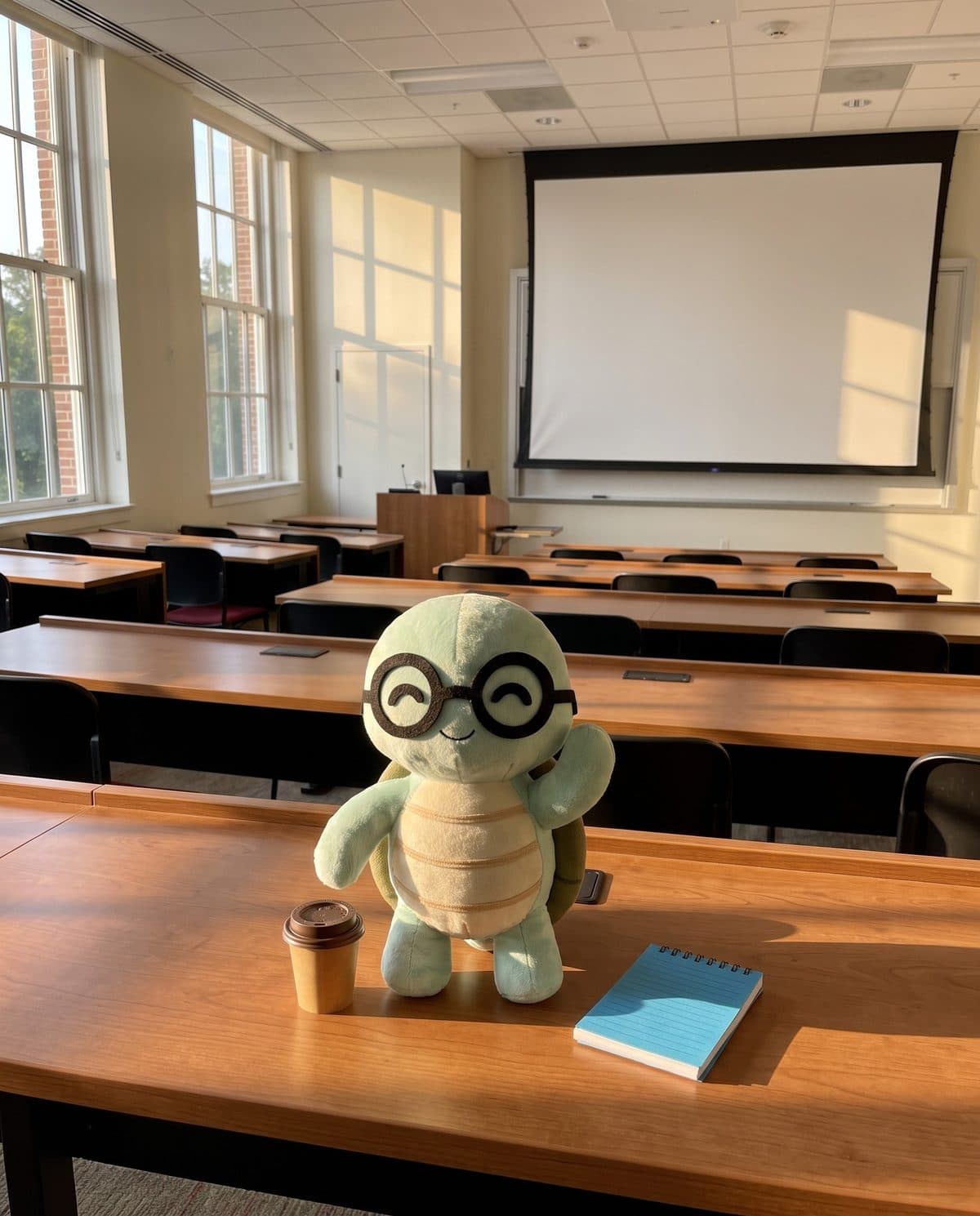
Every semester, people sign up for 8 a.m. classes with the best intentions. By week four the room is noticeably emptier. If you’ve been one of the empty seats, you’re in good company, and discipline is only part of the story.
Your body clock is running late
Sleep timing shifts across a lifetime. A large survey of people’s sleep habits found that sleep timing drifts later and later through adolescence, then turns around and starts getting earlier at about age 20.1 In other words, a lot of college students are close to the latest their body clocks will ever run, and an 8 a.m. class asks them to be up and moving well before they’re ready.
Sleep experts recommend that adults sleep 7 or more hours a night on a regular basis.2 For an 8 a.m. class that’s a 20-minute walk away, that puts lights-out somewhere around midnight, which is about when campus starts to feel most awake.
None of that moves the class, but it helps to know the morning is working against a real tendency.
Make the morning a short chain of places
The 8 a.m. gets easier when the morning stops being a series of decisions and becomes a route. A few ideas:
- Set up the night before: bag packed, shoes by the door, clothes on the chair. The fewer choices between your bed and the door, the better.
- Put a stop you like on the way. If you’re a breakfast or coffee person, make the dining hall or café on your route part of the plan, so the first place you go is one you want to be.
- Know your backup route. If you miss the shuttle, which way is fastest on foot? Decide tonight, while you’re calm, instead of at 7:52.
- Sit in the same seat each time. It’s one less thing to think about when you walk in.
Plan for the hard mornings
The mornings that go wrong are usually predictable: after a late night, after a game, on the day of a quiz you’re dreading. That makes them good candidates for if-then plans, which spell out exactly what you’ll do when a specific situation comes up.3
- “If I’m still up at 1 a.m., I’ll set a second alarm across the room.”
- “If it’s raining, I’ll leave ten minutes early instead of deciding whether to go.”
- “If I wake up late, I’ll go to the second half instead of skipping the whole class.”
That last one matters. Arriving late still beats not arriving, and it keeps class on the list of places you go.
How NoTestudo counts class
A “Get to class” goal in NoTestudo works like any other place goal. Add the building where the class meets, set a weekly target, and the app notices when you arrive. There’s nothing to tap and nothing to remember at 7:58.
Stays under three minutes look like passing by, so cutting through the building on the way somewhere else doesn’t count. Sitting through the lecture does.
Over a few weeks, the record shows something more useful than any single morning: which days you tend to make it, which ones you don’t, and what was going on the night before. That’s a pattern you can plan around.
“Rise and shine. Slowly. I’m a turtle.”

Be kind about the misses
You will miss an 8 a.m. at some point. Curiosity helps more than a lecture to yourself. Was it the late night, the rain, the walk? Change one thing about the route or the night before, and try again on the next class day. The week isn’t over because one morning went sideways.
When registration comes around
A review of research on college students’ sleep lists adjusting class times among the ways to cut down on sleepiness.4 You can’t always choose, since some required classes only meet early. But when you do have a choice, your own record is a better guide than your optimism in April.
Before you register, look back at the semester. Which mornings did you make? If your Tuesday and Thursday 8 a.m. visits were steady and your Friday ones weren’t, that’s worth knowing when you build next semester’s schedule. And if early classes can’t be avoided, the same record tells you which nights before them need protecting. For more on that, the turtle has some thoughts about bedtime.
Try this
Pick your hardest morning class and write one if-then plan for it tonight. Then put everything you need by the door.
References
- Roenneberg, T., Kuehnle, T., Pramstaller, P. P., Ricken, J., Havel, M., Guth, A., & Merrow, M. (2004). A marker for the end of adolescence. Current Biology, 14(24), R1038–R1039. https://doi.org/10.1016/j.cub.2004.11.039 (opens in a new tab)
- Watson, N. F., Badr, M. S., Belenky, G., et al. (2015). Recommended amount of sleep for a healthy adult: A joint consensus statement of the American Academy of Sleep Medicine and Sleep Research Society. Sleep, 38(6), 843–844. https://doi.org/10.5665/sleep.4716 (opens in a new tab)
- Gollwitzer, P. M. (1999). Implementation intentions: Strong effects of simple plans. American Psychologist, 54(7), 493–503. https://doi.org/10.1037/0003-066X.54.7.493 (opens in a new tab)
- Hershner, S. D., & Chervin, R. D. (2014). Causes and consequences of sleepiness among college students. Nature and Science of Sleep, 6, 73–84. https://doi.org/10.2147/NSS.S62907 (opens in a new tab)