The coffee run math
Small, repeated stops are easy to miss. A little arithmetic on coffee runs and takeout, and a few ways to keep more without giving up what you like.
The NoTestudo team
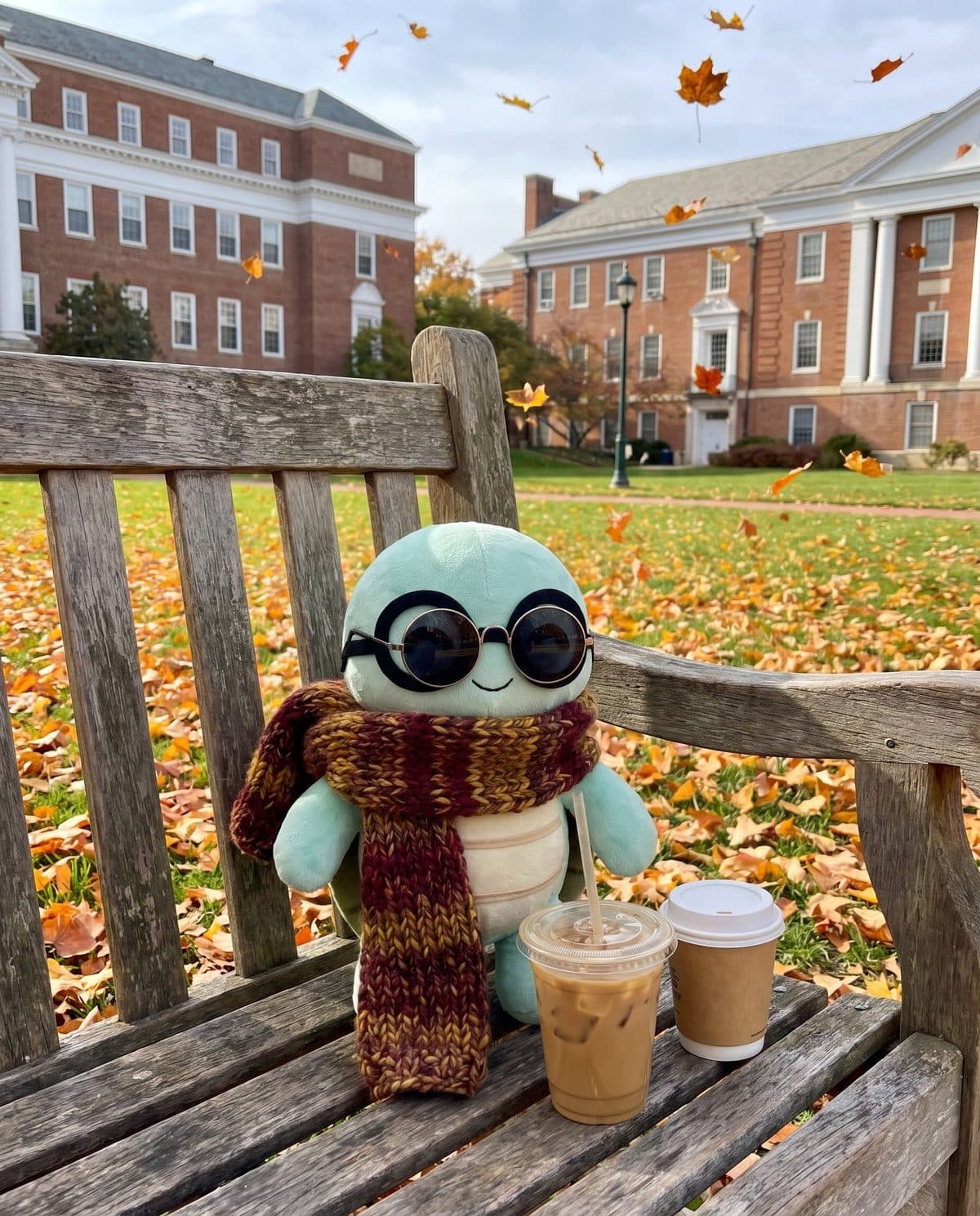
Nobody decides to spend a lot of money on coffee. You decide to get one coffee, today, because you’re tired and the café is right there. Then you decide again tomorrow. Each decision is small and perfectly reasonable. The total is the part nobody sees.
Small purchases are slippery because they never arrive all at once. A six-dollar charge doesn’t stand out on a statement full of other charges, and it doesn’t feel like a choice about your budget when you’re standing at the counter. It feels like a choice about this morning.
Do the math once
To see a small habit at full size, take what one visit costs, multiply by how often you go, then stretch it over a semester and a year.
Coffee
Say a coffee costs you $6 and you get one four times a week:
- Per week: 4 × $6 = $24
- Per 15-week semester: $24 × 15 = $360
- Per year: $24 × 52 = $1,248
Takeout
The same math works for anything you buy often. Takeout at $15, three times a week, comes to $45 a week, $675 over a 15-week semester and $2,340 over a year.
Time
It works for time, too. A 20-minute coffee run four times a week is 80 minutes a week, which is 20 hours over a semester. That’s a lot of hours for a habit you barely notice.
None of this means you should stop buying coffee. It means the coffee is a bigger line in your week than it feels like at the counter. Once you’ve seen it at full size, you can decide on purpose how much of it you want.
Sometimes it isn’t about the coffee
It’s worth asking what a run does for you. Sometimes it really is the coffee. Often it’s something else: a break between classes, a reason to get out of your room, ten minutes with a friend, a small reward after a long lab. Those are good things to want.
If the run is mostly a break, a walk around the block or a stop at a free spot on campus might do the same job. If it’s about seeing a friend, make that the plan: one standing coffee date a week, on purpose, instead of five solo runs by default. You keep the part you liked and drop the part that was just habit.
Change the route before the order
Ask yourself where your coffee runs happen. For a lot of people the answer is a place on a route: the café on the walk to class, the takeout spot next to the bus stop, the delivery app that’s still open at midnight. Routes and routines are easier to change than wants, so start there.
- Decide which runs you love and keep those (maybe it’s the Friday one with a friend). Let the automatic ones go.
- If the café is the only thing between your dorm and your 9 a.m., try a different path. It can do more than a lot of willpower.
- Set up a cheaper version where you already are: a thermos in your bag, cold brew in the fridge, snacks wherever you usually get hungry.
- Make the target weekly. “Coffee shop at most twice a week” leaves room for the runs you care about and gives you something to hit.
What NoTestudo counts
In NoTestudo, “fewer coffee runs” is a go-less goal tied to the cafés you pick. The app notices visits on its own, and stays under three minutes look like passing by, so walking past the café on the way to class doesn’t count against you. A real stop does.
Money saved estimates what you didn’t spend when you skip a usual run, and you can record it yourself when you skip something you’d normally buy. It stays private: money saved is never shared with friends or groups.
Try this
This week, change nothing. Let your coffee runs and takeout orders add up. Next Sunday, multiply the week by 15 and by 52. Then decide which runs are worth keeping.
Keep what you like
The goal is a week where the treats are the ones you chose. A $6 coffee you look forward to on Friday is a good use of $6. The fourth automatic one of the week, bought because you happened to walk past, might not be. Only you can tell the difference, and the math makes it easier to see.