Your habits have addresses
Habits are tied to the places where they happen. That makes places one of the most useful things to plan around.
The NoTestudo team
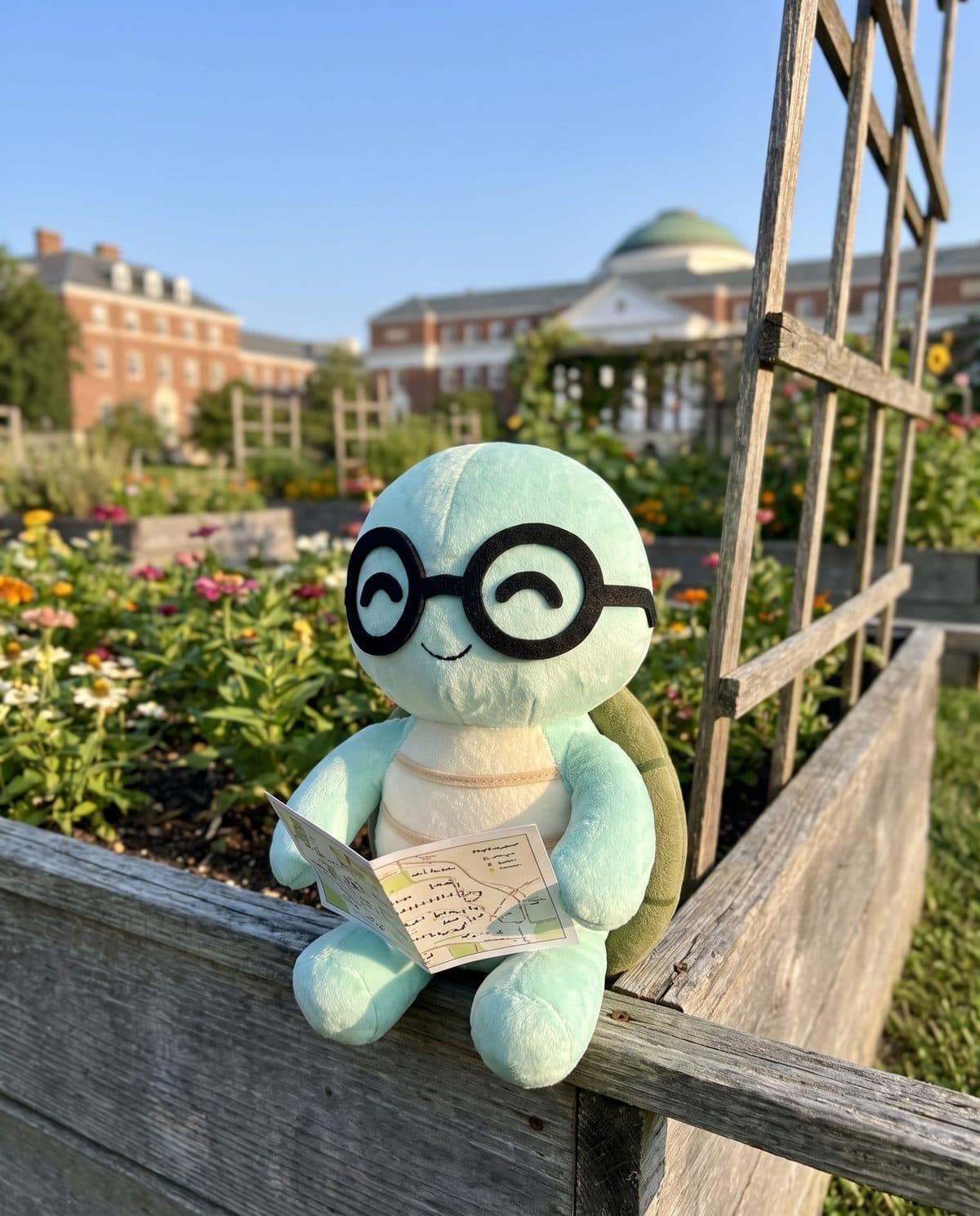
Think about the last time you ate something you hadn’t planned to. Chances are you can say exactly where it happened: the vending machine outside your 2 p.m. lecture, the counter at the late-night spot near your dorm, the snack drawer at a friend’s place. People are often fuzzy about why they did something. They’re rarely fuzzy about where.
That isn’t a coincidence. A lot of what we do on autopilot is tied to a place, and a place is something you can plan around.
How a place becomes a cue
Habits form through repetition in a stable setting. Each time you do the same thing in the same context, the link between the two gets a little stronger. Once the habit has formed, being in that context can be enough to start the behavior before you’ve really decided anything.1
A well-known pair of studies makes this concrete. Habitual popcorn eaters were given either fresh popcorn or stale popcorn. In a cinema, they ate about as much of the stale popcorn as the fresh. Outside the cinema, or when they had to eat with their non-dominant hand, the habit lost its grip, and how the popcorn tasted mattered again.2
The popcorn wasn’t the whole habit. The cinema was part of it.
When your places change, your habits wobble
The flip side is that changing places shakes habits loose. In a study of students transferring to a new university, habits like exercising, reading the newspaper and watching TV tended to survive the move only when parts of the setting stayed the same, like reading the paper with other people.3
The same study found that when old habits were disrupted, people’s current intentions had more say in what they did. You’ve probably felt a version of this. The first weeks of a new semester, a new dorm or a new job feel unusually flexible, because the cues that used to run your routine aren’t there anymore. It’s a good time to pick new places on purpose.
Planning around places
If places carry this much weight, they’re worth planning around directly. A few ways to start:
- Make the good place easy to reach: the gym on your way home rather than the one across campus, the library you already walk past.
- Give the hard place a detour. If the walk home goes past the bar or the drive-thru, try a route that doesn’t.
- Keep one place for one thing, like a table that’s only for studying. The more consistent the setting, the more of the starting it does for you.
- Be patient. In a study that followed people building a new daily habit in a consistent setting, the time it took for the behavior to become close to fully automatic ranged from 18 to 254 days.4 Weeks of repetition are normal.
Map your own week
Try this five-minute exercise. Write down the five places where you spent the most time last week, not counting where you sleep. Next to each one, mark whether you’d like to be there more, less, or about the same.
You may find a surprise or two: a place that takes more of your week than you thought, or a place you care about that barely made the list. Either one is a good first goal.
Where NoTestudo comes in
NoTestudo is built on this idea: your goals are made of places. When you set a goal, you choose the places that decide it, like the rec center for a gym goal or the coffee shop for spending less. The app notices when you arrive and leave, so the record builds itself.
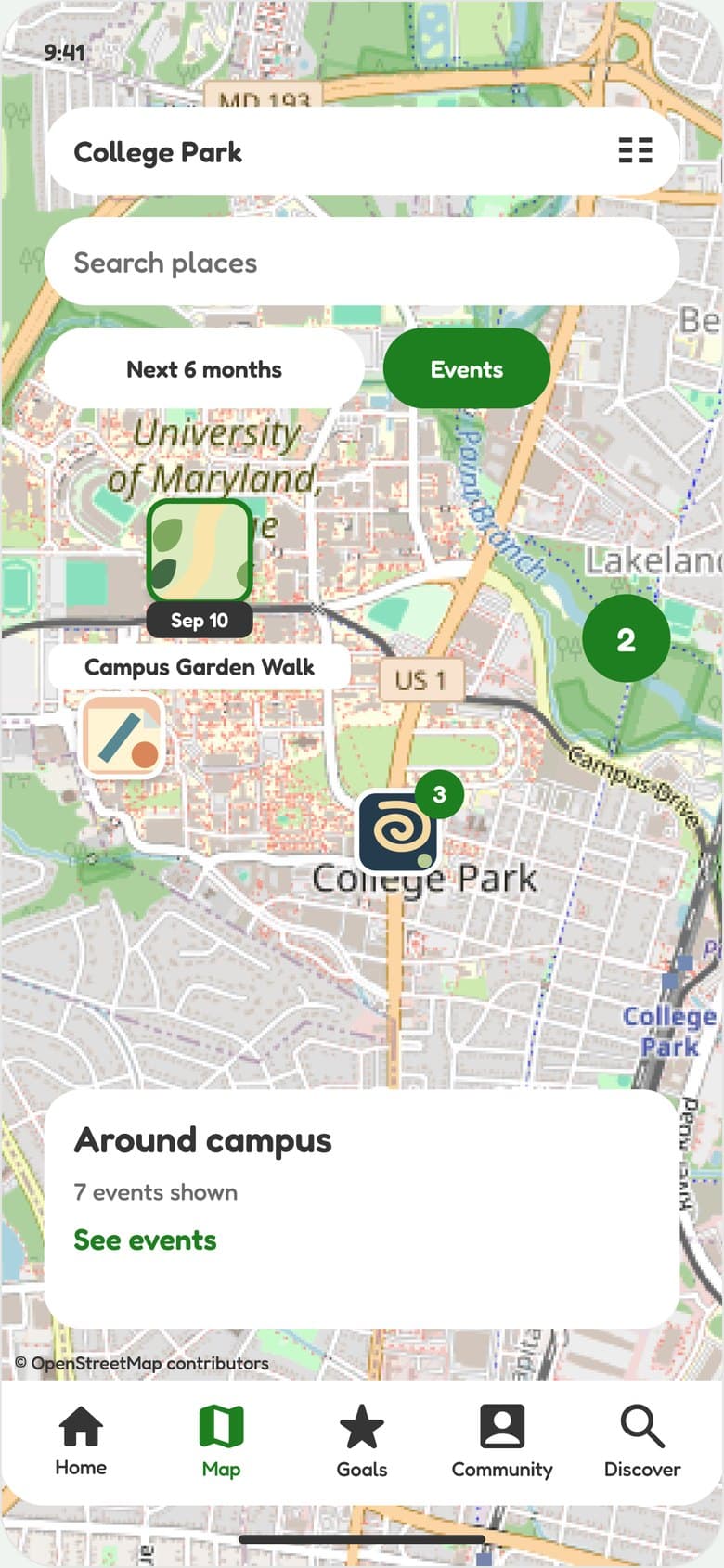
Seeing your week laid out by place tends to be clarifying. People can usually name the places that matter to them. What’s harder to see is the pattern: that Tuesday and Thursday nights end at the same spot, or that library time drops off whenever a certain class runs late. Once the pattern is in front of you, the plan is a lot easier to write.
What a visit can’t show
A visit shows where you were, not what you did there. NoTestudo can’t see studying itself, but it can notice time at McKeldin Library. That’s why progress shows up as time and visits, never as a verdict about you.
Your habits already have addresses. Some of them are worth choosing on purpose.
References
- Wood, W., & Neal, D. T. (2007). A new look at habits and the habit–goal interface. Psychological Review, 114(4), 843–863. https://doi.org/10.1037/0033-295X.114.4.843 (opens in a new tab)
- Neal, D. T., Wood, W., Wu, M., & Kurlander, D. (2011). The pull of the past: When do habits persist despite conflict with motives? Personality and Social Psychology Bulletin, 37(11), 1428–1437. https://doi.org/10.1177/0146167211419863 (opens in a new tab)
- Wood, W., Tam, L., & Witt, M. G. (2005). Changing circumstances, disrupting habits. Journal of Personality and Social Psychology, 88(6), 918–933. https://doi.org/10.1037/0022-3514.88.6.918 (opens in a new tab)
- Lally, P., van Jaarsveld, C. H. M., Potts, H. W. W., & Wardle, J. (2010). How are habits formed: Modelling habit formation in the real world. European Journal of Social Psychology, 40(6), 998–1009. https://doi.org/10.1002/ejsp.674 (opens in a new tab)